Backstage Blog
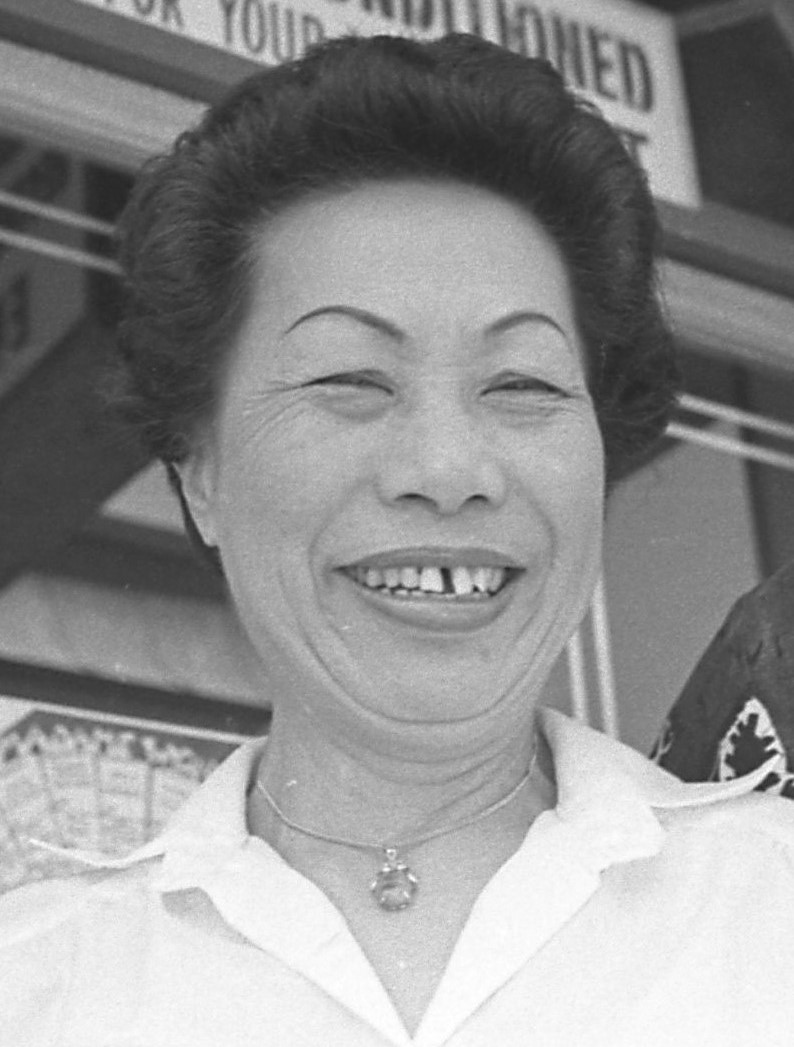
Esther Wong- Madame Wongs/Madame Wong’s West Clubs in Hollywood.
Esther Wong — “The Godmother of Punk”
Esther Wong was one of the most important figures in the Los Angeles punk and new-wave scene of the late 1970s and 1980s. She owned the famous clubs Madame Wong’s and Madame Wong’s West, where many legendary bands got their early start. She was born in Shanghai, China and originally worked in the family Chinese restaurant business.

The restaurant in Chinatown eventually became Madame Wong’s, which unexpectedly turned into one of the hottest music venues in L.A.
In 1978, Esther Wong began booking punk and new-wave bands to perform at her Chinatown restaurant. Soon, the club became a launch pad for bands such as The Go-Go’s, X, Oingo Boingo, The Germs, The Police, Berlin, Jane’s Addiction, The Red Hot Chili Peppers, and many more. She became known as the “Godmother of Punk” for helping many musicians when no one else would book them. Esther Wong was famous for being extremely tough and outspoken, very protective of the bands she liked, and not afraid to yell at the rowdy crowd. She actually grabbed and threw overly rowdy people out of the club. She had a reputation for running the club like a strict mother, which many musicians actually respected. The bands were afraid of her but loved her, at that time, getting stage time in Hollywood was worth it. “If you survived a show at Madame Wong’s, you knew you were a real band.”

Madame Wong’s West.
When the original club became famous, she opened Madame Wong’s West in Santa Monica in 1981, bringing the scene closer to the beach and the Hollywood crowd.. Esther Wong helped shape the Los Angeles underground music scene. Without her clubs, many early punk and new-wave bands might not have had a place to play. Her venues became part of the same legendary circuit as The Whisky a Go Go, The Roxy Theatre, and The Cathay de Grande.
Esther Wong sometimes paid bands with food instead of money — Chinese dinners from the restaurant downstairs. The vibe was raw and underground, not corporate, and the crowd was a mix of punks, glam rockers, artists, and club kids Leather jackets, mohawks ripped shirts and loud guitars, thats what it was all about.

I loved both of these clubs and saw many undiscovered bands there, GNR, LA Guns, Jane’s Addiction and Francis X.

Hollywood.
The Sunset Strip pulsed like a live wire. We were young, beautiful, reckless, and talented (or pretending to be); and we belonged there.

Every night felt like: A live concert, a rock and roll fashion show, and a record deal two drinks away.
Hollywood was our epicenter and the Sunset Strip was the runway — from Doheny to Crescent Heights.
Hair was higher than rent. Leather was tighter than loyalty, and nobody walked — they entered.
The Clubs (our real Cathedral) If you were serious, you rotated between:
- Whisky a Go Go
- The Roxy Theatre
- Gazzarri’s
- Troubadour
- Rainbow Bar & Grill
And, that is only the public clubs. Our underground clubs were the best but that is another blog.
You didn’t just “go out in Hollywood.” You made laps, checked who was in town, and clocked who got signed, who switched bands, and who was playing that night. I had to buy a diary just to keep up! There were at least 7 clubs to visit a night, and we had to be there. Talk about FOMO…that was us. After all, we were scenesters, and we had to be in the scene.
Hollywood wasn’t just a buzz in the eighties; it was a voltage. Backstage smelled like: Aqua Net, Jack Daniel’s, Budweiser, Marlboro cigarettes, and ambition! If you were there you know. If you weren’t, stay tuned for the book. It explains everything.


The Look in the mid-eighties was glam metal, punk, rockabilly and goth, and sometimes a little of everything. We were in full bloom. We teased our hair into platinum clouds or dyed it midnight black, painted our lips crimson, and rimmed our eyes with kohl.
We squeezed into leather that hugged every curve—pants that squeaked when we walked, miniskirts that barely covered what mattered. Fishnets ran up our thighs, disappearing under boots that reached for the sky or those pointy NANA shoes everyone coveted. Our band shirts weren’t just worn—they were transformed, slashed strategically, hanging off shoulders, draped with crosses and chains that clinked when we moved. Spandex wrapped our legs in leopard spots, zebra stripes, polka dots—walking canvases of rebellion. Cowboy boots, beetle boots, ankle leather boots or Chuck High-Tops completed the uniform. This wasn’t fashion; it was armor.
The reality of the after-hours. The glamour had a shadow. Cocaine was everywhere. Jack Daniel’s was practically a sponsor. Motel rooms off La Brea or cheap apartments in Hollywood were party hubs. People disappeared into addiction, while some were already burning out.
Deals were whispered at 2 AM. Hearts were broken before sunrise; you could fall in love on Tuesday and find out he had three other girlfriends by Friday. That was the Sunset Strip.
In Hollywood proper, downtown Hollywood—we’d start around midnight and descend into the underground clubs. Our nights were a carousel of venues, my daily planner inked with addresses and times to track it all. By 5 or 6 AM, we’d surface only to dive into some other bar or apartment party, gathering until dawn broke. Then home to sleep and oblivion until evening, and repeat. Work days meant no sleep at all—just endless Coca-Cola, burnt coffee, or leftover cocaine keeping our eyes open. That or something stronger from someone’s pocket, passed under tables when the night wouldn’t let go, or maybe you had diet pills to keep you awake. When you hear about the eighties debauchery, we didn’t realize at the time that this would be our label; we were too busy having fun.
Hollywood was our playground, and every bar and underground club, was our clubhouse.